Sports Card Value Scanner
- 4.4
- Rating
- 50.00K
- Installs
- Free
- Price

 Analysis by App-foxy
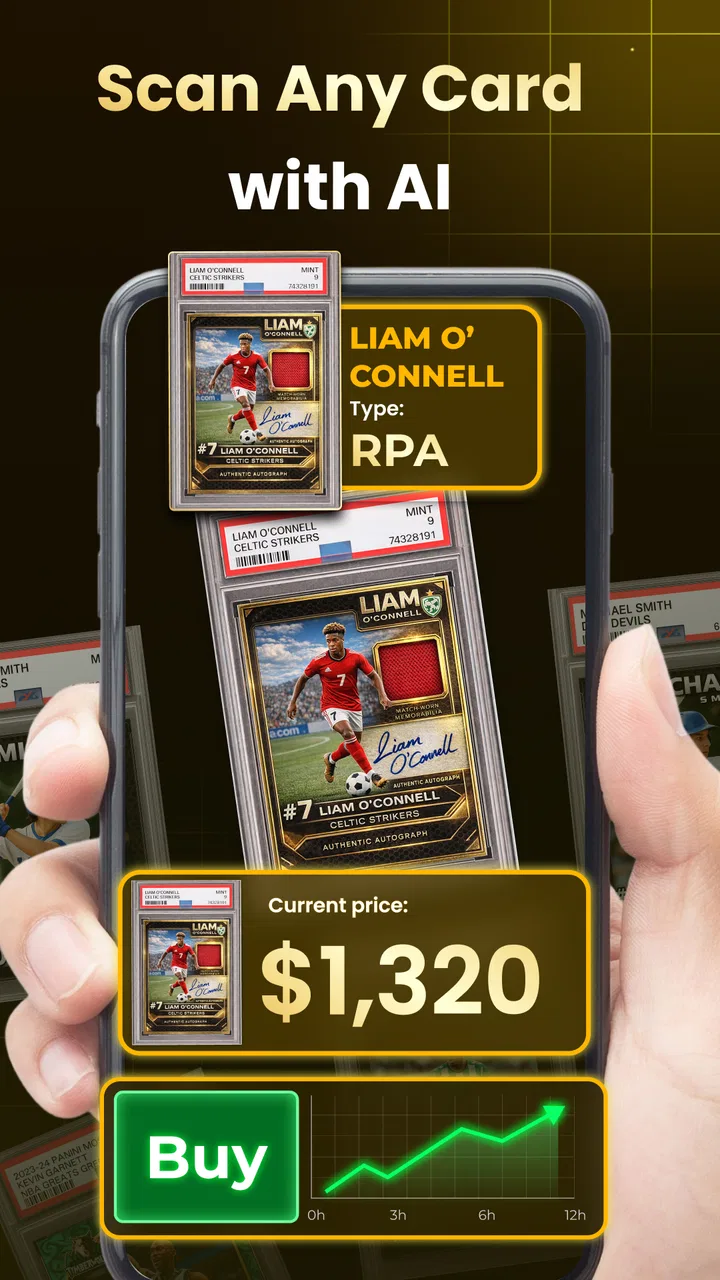
Sorting sports cards usually starts as a relaxing hobby and quickly becomes a small research project. I found Sports Card Value Scanner most useful when I wanted to turn a messy stack of cards into something easier to understand: scan an item, look at its value context, follow comparable sales, and keep the collection organized instead of relying on memory or scattered notes. It is a free sports app from The App Dude, aimed at collectors who want a practical reference tool rather than a social feed or a full marketplace.
The first impression is appealing because the main idea is easy to grasp. A card comes out of a box, the scanner gives me a starting point, and the collection tools give that information somewhere to live. That combination matters more than any single feature. A value estimate by itself can be interesting for a few minutes; a value estimate connected to comps and personal organization has a better chance of becoming part of a regular collecting routine.
Still, I would not treat the app as an instant answer machine. Card values can change with condition, grading, player performance, set demand, parallel details, and the difference between an asking price and a completed sale. The app is most helpful when I use its results as a research shortcut, then apply my own judgment before buying, selling, trading, or assigning a value to an important card.
You May Also Like

 AccuWeather: Weather Radar
AccuWeather Review: A Quick, Clear Forecast for Everyday Decisions
For everyday plans, the best forecast is the one you can understand quickly. AccuWeather makes rain timing, radar, and local conditions easy to act on, with a few trade-offs.

 Hill Climb Racing
Why Hill Climb Racing Still Turns Crashes Into One More Run
A tiny car, a bumpy hill and one more upgrade: Hill Climb Racing keeps resurfacing because its simple chaos makes every near-miss feel personal.

 AliExpress - Shopping App
AliExpress Makes Global Shopping Feel Personal, but Shoppers Bear the Risk
AliExpress turns a global marketplace into a pocket-sized discovery engine. Its reach is useful, its shopping loop compelling, and its trade-offs easy to miss.

 Lords Mobile: Kingdom Wars
Lords Mobile Is a Kingdom-Building Routine, Not a Quick Match
A case-by-case verdict on the building, battles, device demands, and social commitments that make Lords Mobile rewarding for some players and exhausting for others.

 PDF Scanner app - TapScanner
TapScanner Makes Paperwork Easier to Capture, Check, and Share
TapScanner makes scanning with a phone feel less like a rescue operation and more like a dependable step in getting work done. Its capture tools are useful, though not flawless.

 Block Blast!
 Shows How Much a Puzzle Game Can Leave Out
A quiet grid game shows why puzzle players increasingly value instant clarity, repeatable skill and low-pressure play—and where the genre still needs to catch up.
More From Our News Desk
View All News


From first scans to a useful collecting routine
I find the first scans most useful when I treat them as the start of a checking routine, not the end of one. This section looks at how to move from initial identification to a repeatable way of sorting cards, so a promising result leads into a collection process that stays manageable.
Why the first week feels productive
During the first week, the strongest appeal is the reduction of friction. Instead of opening a browser for every card, typing a long player and set name, and trying to identify the exact version manually, I can begin with the camera-based workflow. That is especially handy after opening several packs or inheriting a collection where the cards are not arranged in a sensible order.
The scanner is not just a novelty when it helps me decide what deserves closer attention. I can quickly separate ordinary cards from items that may need a more careful look, then use the value and comparable-sales information to guide the next step. This is a better use of time than treating every card as equally important. The app becomes a filter for attention, not merely a digital price tag.
One practical habit is to scan in small batches rather than attempting an entire collection in one sitting. I would group cards by sport, player, set, or storage box, and check the results while the physical cards are still in front of me. That makes it easier to catch an incorrect match and prevents a long, unreviewed list from becoming confusing later.
The collection side also gives the app a reason to remain installed. I do not have to remember which cards I checked last weekend or keep a separate note with rough figures. A personal inventory can be useful when preparing for a trade, deciding which cards need protective storage, or simply trying to understand what is actually in a collection. For someone who has cards spread across drawers, binders, and boxes, that organization may be more valuable than the scanning itself.
What I would verify before trusting a result
Recognition is not the same as authentication. A visually similar base card, insert, short print, parallel, or numbered version may have a very different market value. After a scan, I would check the card number, year, set, team, player, visible designation, and any serial numbering against the physical card. This is one of the most important workflows in the app because a fast match is only useful when it identifies the right object.
Condition deserves the same caution. A scanner can help me locate a card and find relevant comparisons, but it cannot replace a close look at corners, centering, surface, edges, and possible damage. A clean-looking card may still have flaws that affect an ungraded sale, while a card in a protective holder may appear more valuable than its actual condition justifies. I would use the app to narrow the research, not to skip inspection.
There is also a subtle difference between a card’s visible value and its realistic selling value. Recent comps can provide context, but the result may vary depending on timing, venue, shipping, fees, and whether the comparison represents a completed transaction or an optimistic listing. My advice is to compare several relevant examples and avoid making a decision from one unusually high number.
A realistic weekend scenario
Imagine finding a box of cards while clearing a relative’s storage space. The cards are mixed, some are sleeved, and the collection includes several sports and years. I would start by creating a simple scanning session for one group, perhaps cards from the same sport, rather than trying to solve the whole box immediately. The scanner could help identify candidates for further research, while the organization tools would let me mark what has already been reviewed.
After that first pass, I would physically separate cards into three piles: items worth researching further, ordinary cards to store together, and cards whose identification needs a second look. I would then use the comparable-sales information for the first pile and record the cards in a consistent way. This workflow prevents a common collecting mistake: spending twenty minutes on one exciting card while losing track of the other cards that still need attention.
For a seller, the same process can support a more disciplined listing routine. I would confirm the exact card, inspect the condition, review multiple comps, and only then choose a reasonable asking strategy. For a trader, the app can make a conversation more concrete, but I would still agree on condition and current market context rather than presenting the displayed value as a guaranteed trade price.
Who gets the most from the app
I think the best audience is the casual or growing collector who wants a quicker way to identify cards and maintain an inventory. It also suits someone returning to the hobby after years away, because the scanning and comp-tracking approach can provide a manageable entry point into a market that often feels full of unfamiliar sets and variations.
Families may find it useful when sorting a child’s collection, especially when the goal is to decide what to keep, protect, trade, or sell. Small sellers can also benefit from a repeatable checking process before listing cards. The app’s Everyone content rating makes it approachable for general household use, although younger collectors may still need adult guidance when interpreting prices or making transactions.
I would be less enthusiastic about it for a professional operation that needs a highly specialized inventory system, advanced accounting, detailed grading records, or a tightly integrated selling workflow. It may also be the wrong choice for a collector who already has a carefully maintained spreadsheet and prefers to research every card manually. In that situation, the camera shortcut may not justify changing an established system.
How it compares with familiar alternatives
The usual alternative is a mixture of search engines, auction histories, spreadsheets, notes, and physical binders. That approach can be more flexible and transparent because I can choose exactly which sources to trust and record any detail I want. Its weakness is the amount of manual work. Searching card by card is slow, and personal notes can become inconsistent when a collection grows.
Sports Card Value Scanner sits between a simple scanner and a full collection-management system. Its advantage is the connected flow from identification to value research to organization. Its trade-off is that I am relying on the app’s recognition and presentation rather than building every part of the research process myself. For quick sorting and everyday reference, that is a reasonable exchange. For high-value decisions, I would still consult additional market evidence.
Compared with a plain price guide, the app feels more useful during physical sorting because the camera is part of the workflow. Compared with a marketplace, it is better suited to preparation and research than to the entire buying or selling process. That distinction is important: I see it as a collector’s workbench, not a replacement for every other tool in the hobby.
What remains useful after the novelty fades
Once the excitement of discovering cards has passed, the lasting question is whether the app still helps me make clearer decisions with less duplicated effort. Here I focus on the habits that keep its research and organization useful over time, while recognizing when a simpler approach may suit a collector better.
Month-to-month value comes from repetition
The long-term benefit depends on whether I keep adding and updating cards. If I install the app only to scan a single box, its value may fade quickly. If I use it whenever new cards arrive, before trades, and during periodic collection cleanups, it has a stronger chance of earning permanent space on my phone.
A monthly review can be simple. I would choose one storage section, check whether the cards are still organized, revisit items that seemed important, and note which cards need better protection or further research. This turns the app from a one-time curiosity into a lightweight maintenance tool. The recurring value is not necessarily discovering a dramatic price change; it is keeping the collection understandable.
Tracking comps can also help me avoid anchoring on an old figure. A card that looked exciting several months ago may have a different market context now, while a card I ignored may deserve another look after a change in interest. I would not refresh every card constantly, but I would revisit cards before a sale, trade, insurance conversation, or major reorganization.
One non-obvious advantage is decision history. Even without treating the app as a formal accounting system, an organized record can show why I set certain cards aside and which items still need verification. That reduces duplicate research. It also helps when a collection is shared by family members, because another person can understand what has already been checked instead of starting from zero.
The maintenance burden is manageable, but real
The main burden is not learning the interface; it is maintaining accuracy. Every scan deserves a quick physical confirmation, especially when cards have similar designs. If I rush through a large batch, the collection may look organized while containing incorrect matches. That creates a false sense of control and can be worse than having no digital record at all.
I would also keep the organization consistent from the beginning. Decide whether the collection is arranged by sport, player, set, value band, storage location, or a combination, then use the same logic each time. The app can help store information, but it cannot choose a personal system that remains intuitive months later. A few minutes spent deciding on labels and groups can save much more time during future searches.
Physical storage still matters. A digital entry does not protect a card from humidity, bending, scratches, or careless handling. I would scan cards over a clean surface, return them to sleeves or holders promptly, and avoid leaving valuable items in a scanning pile. This sounds basic, but it is an important trade-off of camera-based collecting workflows: convenience can encourage handling more cards more often.
There is also a financial consideration. The app is free to install, while in-app purchases range from a few dollars to several tens of dollars per item. I would begin with the free experience and decide whether any paid option genuinely improves my routine. A collector with a small personal collection may never need to spend anything, while someone processing many cards may judge the extra cost differently. I would not pay simply because a price result looks exciting.
Where fatigue can set in
Scanning can become repetitive when the collection is large, and the excitement of the first discoveries does not last forever. If every session feels like photographing, correcting, and cross-checking the same information, I may return to a spreadsheet or manual search for certain batches. The app works best when it removes enough friction to keep me moving, not when I expect it to eliminate every manual decision.
Market uncertainty can cause another kind of fatigue. Collectors sometimes want one definitive number, but card values are better understood as a range shaped by condition and recent demand. If the app encourages me to chase a single figure, disappointment is likely. I get more value when I treat comps as evidence and ask whether the comparison really matches the card in my hand.
Recognition errors, when they occur, are particularly frustrating during a large sorting project. The cost is not only correcting one card; it is checking whether similar cards were matched the same way. My workaround is to verify the first few examples from each new set or design before scanning the rest. That small pause can prevent an entire batch from requiring a second pass.
Collectors who mainly enjoy the tactile and social side of the hobby may also find the digital routine unnecessary. If your pleasure comes from browsing shows, talking with other collectors, and keeping a small hand-picked group of cards, a scanner may feel like administration. In that case, a physical binder and occasional manual research could be a better fit.
Questions I would ask before installing
Will it work on an older phone? Sports Card Value Scanner requires Android 8.0 or later, so anyone using an older Android device should check compatibility before planning a scanning project. On a supported phone, camera quality, lighting, glare, and the condition of the card itself will still affect how comfortable the process feels. I prefer even lighting and a clean background because they make visual checking easier.
Can it replace a professional appraisal? I would say no. It can speed up identification and provide useful market comparisons, but expensive, rare, damaged, altered, or unusual cards deserve independent verification. The more money involved, the less sensible it is to rely on one app or one displayed comparison.
Is it useful without constant selling? Yes, if organization matters to you. A collector can use it to build an inventory, review cards before trades, and keep track of what has already been researched. If you have no interest in cataloging or checking values, however, the core workflow may not justify regular use.
Does the rating reflect broad adoption? The app has a 4.5 average from over 500 ratings, with more than 10 thousand installs, which suggests a meaningful group of collectors has tried it. I would read that as encouraging rather than conclusive. The important question is whether its scanning and organization style matches the way you handle cards.
My long-term verdict
After the first-week novelty fades, I think Sports Card Value Scanner can earn lasting space for collectors who repeatedly sort, trade, buy, or sell cards. Its strongest quality is the workflow connecting a physical card with research and organization. That connection saves time and gives routine tasks a clearer structure, especially when a collection is growing faster than memory can handle.
Its lasting value depends on disciplined use. I would verify matches, inspect condition myself, compare relevant sales, and keep the collection organized in a consistent way. Used like that, the app becomes a practical assistant rather than an authority. Used as a shortcut to a guaranteed price, it can create unrealistic expectations and poor decisions.
The current version is 2.1, and The App Dude has positioned the product clearly within sports collecting rather than trying to be a general-purpose finance or marketplace tool. That focus is a strength for the right user. I would recommend trying the free version to process a representative group of cards, not just the most exciting ones. If it makes ordinary sorting faster and leaves you with a cleaner inventory, it has passed the real test.
My final view is positive but measured: the app earns a permanent place when it supports a habit, not when it merely produces a surprising first scan. It is a good fit for everyday collectors who want less searching and better organization, while serious valuation decisions still call for careful inspection and broader research. For that audience, it offers useful recurring value without asking the hobby to become a full-time data-management project.
FAQs for Sports Card Value Scanner
01What is the Sports Card Value Scanner app?
The Sports Card Value Scanner app is designed to help collectors and enthusiasts quickly determine the value of their sports cards. Using advanced image recognition technology, the app scans cards and provides real-time market prices, helping users make informed decisions about buying, selling, or trading.
02How accurate are the card valuations provided by the app?
The Sports Card Value Scanner app uses a robust database and advanced algorithms to deliver accurate market values. However, valuations can fluctuate due to market changes and card conditions. It's advisable to use the app’s prices as a guideline and cross-reference with other sources for the most precise valuation.
03Is the app compatible with all types of sports cards?
The app supports a wide range of sports cards, including baseball, basketball, football, and hockey cards. While it covers many popular brands and sets, there may be some niche or rare cards that are not yet included in the database. Regular updates aim to expand compatibility.
04Does the app require an internet connection to function?
Yes, the Sports Card Value Scanner app requires an internet connection to access its database and provide up-to-date market values. The app uses online resources to ensure that users receive the most current and accurate pricing information available.
05Are there any costs associated with using the app?
The app offers a free version with basic features for casual users. However, there may be premium options available for a subscription fee, which provide additional features such as detailed card history, advanced analytics, and ad-free usage. Check the app store for detailed pricing information.
Pros
- Accurately scans diverse card types.
- User-friendly interface for easy navigation.
- Provides real-time market value updates.
- Includes a comprehensive card database.
- Offers detailed card history and stats.
Cons
- Requires a stable internet connection.
- Frequent ads can be intrusive.
- Limited functionality in free version.
- Occasional scanning inaccuracies.
- No offline mode available.

Sports Card Value Scanner
Gallery